Best Protein Timing After a Workout: The Measured Answer
The timing question answered with measurements: the window narrows or widens with your previous meal, and day-long pulse distribution beats a race of minutes — with clocks for three training patterns.

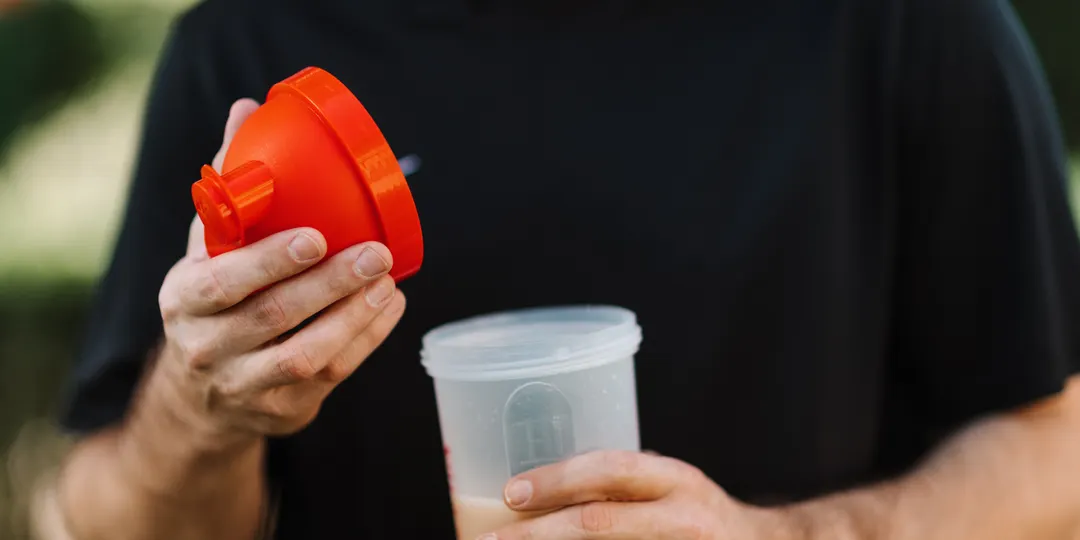
You leave the gym and the clock starts ticking in your head: thirty minutes to the anabolic window, or the session was wasted? The timing question deserves a better answer than gym folklore. This guide is about when — what the measured trials say about the post-workout window, how to place your meals around training, and when timing genuinely matters versus when it is a detail. (For how many grams, we have a dedicated calculation guide.)
This guide is also available in Arabic.
The direct answer: your whole day is the window — and it narrows only when you train fasted or after a long gap
The measured picture is more forgiving than the "thirty minutes or nothing" legend. A review of the evidence published in the Journal of the International Society of Sports Nutrition on nutrient timing found that the real importance of post-exercise protein concentrates in one situation: when your previous meal was remote or the session was fasted — there, the meal after training becomes genuinely urgent — the anabolic-window review. But the lifter who ate a protein-rich meal two to three hours before training still has amino acids circulating into and beyond the session — the window is not closed waiting for them.
What happens to the muscle after the session, in timing terms
After resistance training, the muscle stays more sensitive to amino acids for hours — the tension and contractions broke down some muscle proteins, and the cells are ready to rebuild as soon as bricks arrive. Protein delivered in this period tilts the balance from breakdown toward building: pulses of protein distributed through the day — roughly every three hours — kept synthesis higher than two large meals or a single mega-dose in a trial on resistance-trained men — the distribution trial driving this guidance. That is the practical meaning of timing: not a race of minutes, but the engineering of distribution.
When timing actually matters
| Your situation | Priority of the post-session meal | Why |
| Fasted or pre-breakfast training | High — eat within two hours | No recent amino acids in circulation |
| Last meal 4-5 hours ago | Medium-high | The old meal's amino acids have faded |
| Protein meal 2 hours pre-training | Low — follow your hunger | The previous meal covers the window |
| Training right after waking, no supper | High | A full night without feeding |
The rule distilled from the review: the importance of timing scales inversely with the proximity of your previous meal — the anabolic-window review.
A practical clock around three training patterns
The morning lifter (7:00 session): a protein-containing supper the night before ← training ← a full breakfast (protein + carbohydrate) within two hours ← the rest of the day distributed every 3-4 hours.
The evening lifter (18:00 session): a balanced lunch at 13:00 (covers the session's start) ← a protein snack at 16:00 if four hours have passed ← training ← dinner soon after the session ← a shake or yogurt an hour before bed.
The fasted lifter (Ramadan or 16/8): train near the end of the fast or right after breaking it, and make the first big meal land as soon as possible after the session — this is the pattern where the window is genuinely narrow. Split the window's protein across two meals (35-40 g each) instead of one giant feeding — measured distribution beats crowding — the distribution trial driving this guidance.
What about pre-workout timing?
The close pre-training meal (two to three hours out) is the best timing investment of the day: easy-digesting carbohydrate with complete protein (oats, banana, and yogurt; or rice and a small chicken breast) raises circulating amino acids before the first working set, buying broad flexibility for the post-session meal — the core of the measured review's conclusion — the anabolic-window review. Coffee and caffeine before training are a performance matter, not a protein-timing one, and belong to a different guide.
A worked weekly example: a lifter training Tuesday, Thursday, and Saturday evenings. Tuesday: balanced lunch at 13:00 ← light protein snack 16:00 ← session 18:00 ← dinner 19:45 ← yogurt before bed 22:30. Thursday mirrors it. Saturday: late breakfast 11:00 ← session 17:00 (six hours after the meal — here the next meal's timing genuinely matters) ← dinner immediately after. Notice how Saturday alone changes the priority rules: the long gap makes the post-session window truly narrow.
Timing versus total: the order of priorities
Three levels of importance, and their order is measured, not preferential. First: the daily total — 1.6-2.2 g/kg of protein with adequate energy; this is what builds muscle — the meta-analysis establishing the total's primacy. Second: distribution — 20-40 g doses across 3-5 meals so that long hours never pass without a stimulus — the ISSN position stand on daily distribution. Third: precise timing around the session — its honest place is the "when it matters" table above, not a ritual of minutes.
Reverse that order — chase the minutes and forget the total — and you are building on sand.
Three common timing questions with measured answers
Do I lose gains if my meal is two hours late? Not unless you trained fasted or after a remote meal; the previous meal extends its influence hours past the session — the anabolic-window review.
Can a pre-workout meal replace the post-workout one? Partially, yes: a close pre-training meal (two to three hours) makes post-session timing broadly flexible.
Are carbohydrates with the post-workout protein necessary for timing? Valuable for rehydration and glycogen after long sessions, but not a hypertrophy requirement; protein is the key to the building window.
Timing in service of the day
Stop asking "how much window is left?" and ask "where were my last meal and my next one?". The lifter who distributes 3-5 protein meals across the day finds that the post-workout window closes itself — the next meal is always near. And for the daily total that stands behind all this distribution, the calorie calculator and macro calculator are ready.
Frequently Asked Questions
What is the best time to eat protein after a workout?
Within about two hours if you trained fasted or after a remote meal; if you ate a protein meal two to three hours before training, the window is far wider — follow your hunger.
Is the thirty-minute anabolic window real?
As a strict rule, no; the measured review locates the importance in fasted training and remote meals, not a universal race of minutes.
Does a pre-workout meal reduce my need for a post-workout one?
It makes it flexible: amino acids from a close pre-training meal keep circulating during and after the session.
How should I spread protein across the day?
Three to five meals of 20-40 g every three to four hours, with the post-workout meal as one of them — measured distribution beats piling it into one or two feedings.
Can I build muscle training fasted?
Yes, with management: train near the end of the fast or after breaking it, and land the big meal soon after the session, split across two doses.
Is casein before bed a replacement for the post-workout meal?
Not a replacement, but a useful nighttime complement: a slow source feeding overnight building within your daily total.